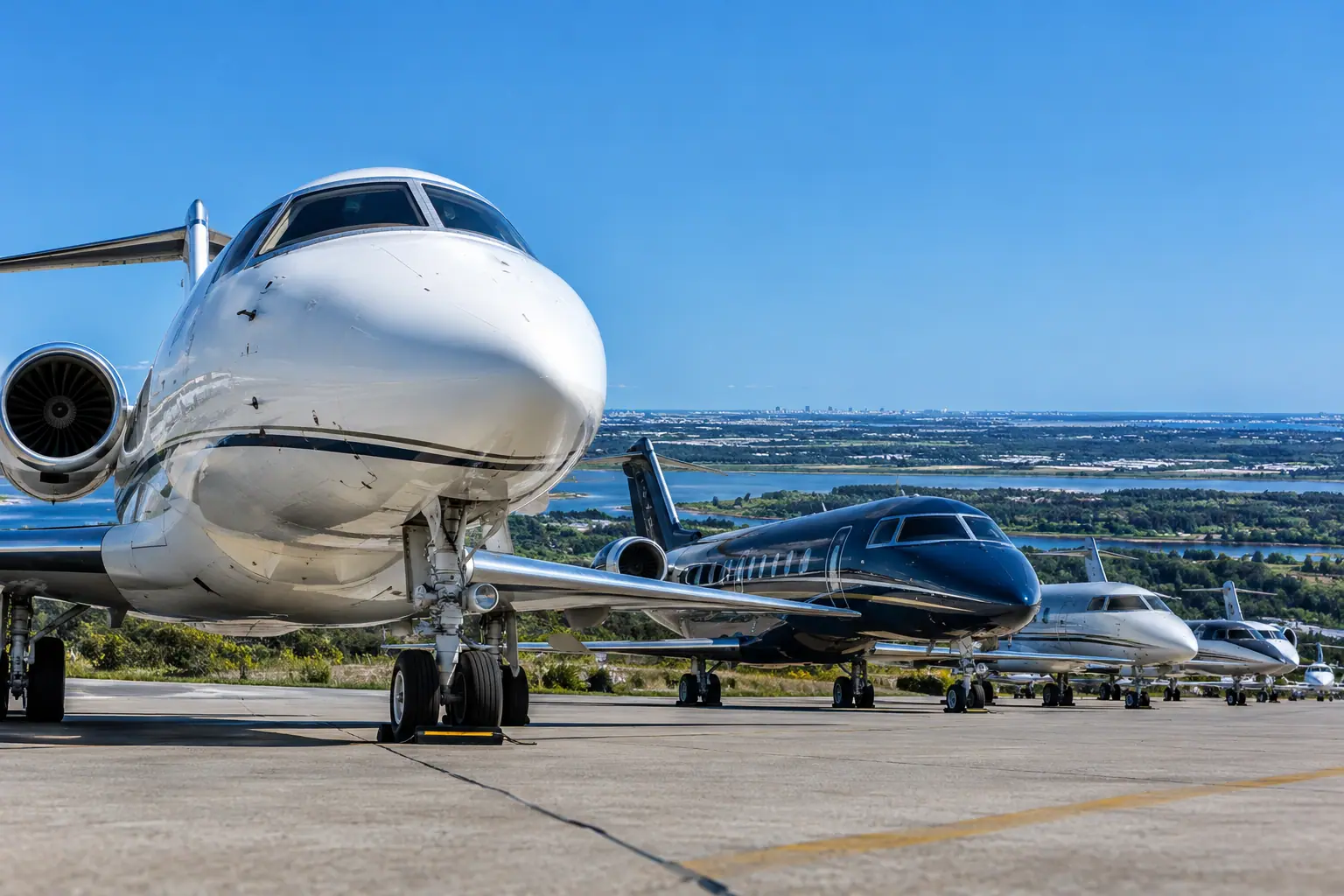
Private jet cost aircraft by class
A private jet cost aircraft comparison starts with the cabin class you need. A light jet typically runs $3,800 to $5,800 per hour in 2026. The total depends on distance, airport fees, and how many passengers you bring.
- Home
- Aircraft
When you request a quote, the number you see reflects more than the hourly rate. The operator factors in flight time, fuel, crew, landing and handling fees at the specific airport, and any international charges if you cross a border. Because we are a charter broker, we pass through quotes from FAA Part 135 operators who hold operational control; we do not own aircraft. That keeps the pricing transparent and lets you compare aircraft within the same mission.
The fleet is organized by class, from turboprops to heavy jets. Each class has a typical hourly range and a comfortable range and passenger count. Use those figures as a starting point, then narrow down to a specific model whose cabin and baggage space fit your group and your day.
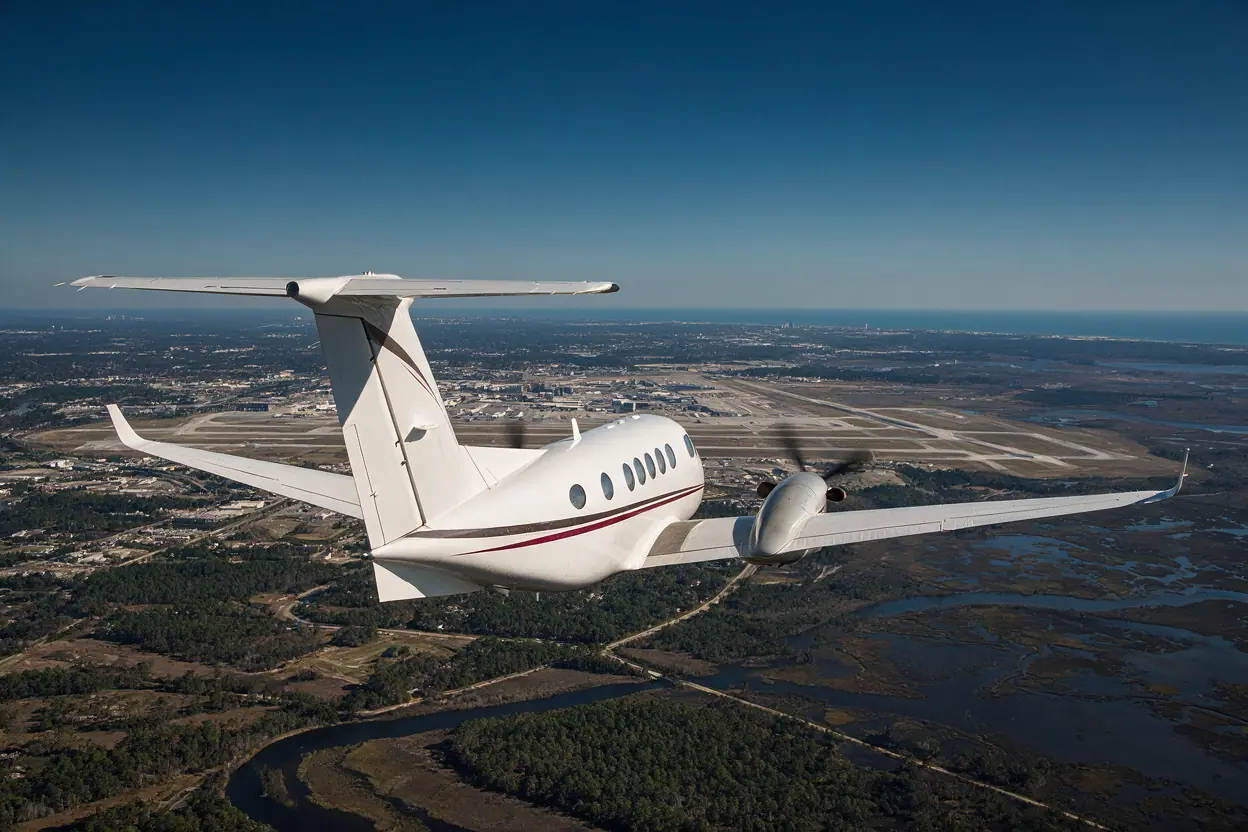
Turboprop
Turboprops are the most economical class, typically $2,200 to $3,500 per hour, and they are well suited to shorter trips where runway length or elevation might limit a jet. They cruise near 300 knots and can reach about 1,500 nautical miles, making them practical for regional hops and secondary airports. Passenger capacity is usually six to eight. If your trip is under two hours and you value access to smaller fields, then a turboprop can be the right first call.
Pilatus PC-12 NGX
- 6 seats
- 290 kt cruise
- 1,800 nm range
The Pilatus PC-12 NGX is a single-engine turboprop seating six, cruising at 290 knots over 1,800 nautical miles. The cabin is 4 ft 10 in tall and 16 ft 11 in long, with 40 cu ft of baggage. It is known for short-field capability and low operating costs. When your destination is a smaller field with a short runway, then this aircraft keeps the trip simple.
Daher TBM 960
- 6 seats
- 330 kt cruise
- 1,730 nm range
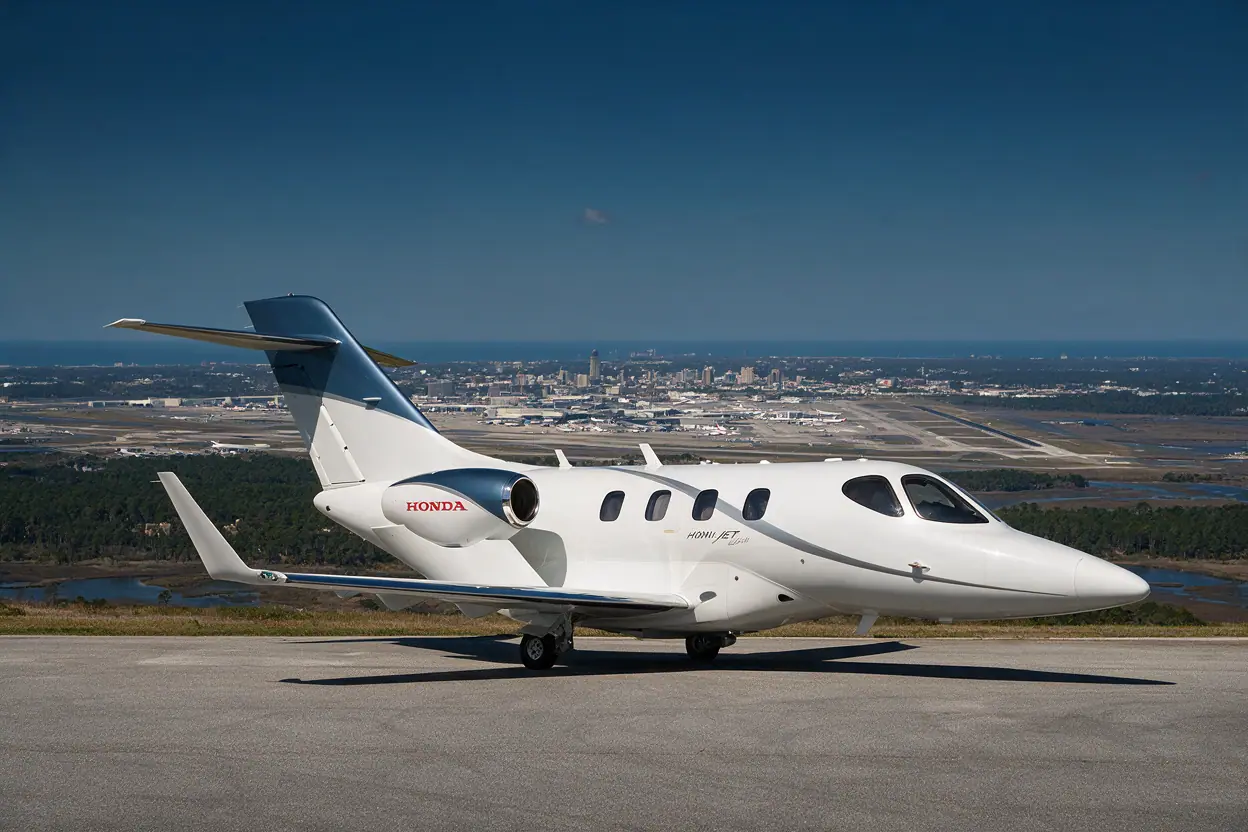
Light jet
Light jets cover $3,800 to $5,800 per hour and are the entry point for true jet speed. They carry four to seven passengers roughly 1,400 nautical miles at about 430 knots, which handles many popular city pairs nonstop. Baggage space is modest, so plan for soft bags on full cabins. When your group is small and your route is under three hours, then a light jet often offers the lowest total jet price.
HondaJet Elite II
- 5 seats
- 422 kt cruise
- 1,550 nm range
The HondaJet Elite II is a light jet for five passengers, cruising at 422 knots with a range of 1,550 nautical miles. Its cabin stands 4 ft 10 in tall and 17 ft 9 in long, and baggage space is 66 cu ft. The over-the-wing engine mount frees up cabin room. For short hops with a small group, it is an efficient light jet option.
Cessna Citation CJ4 Gen2
- 7 seats
- 451 kt cruise
- 2,165 nm range
The Citation CJ4 Gen2 seats seven and cruises at 451 knots with a range of 2,165 nautical miles. The cabin is 4 ft 9 in tall and 17 ft 4 in long, with 71 cu ft of baggage. It is a fast light jet that can handle longer regional routes nonstop. If your group is six or seven and you want jet speed on a three-hour leg, then the CJ4 Gen2 is a strong fit.
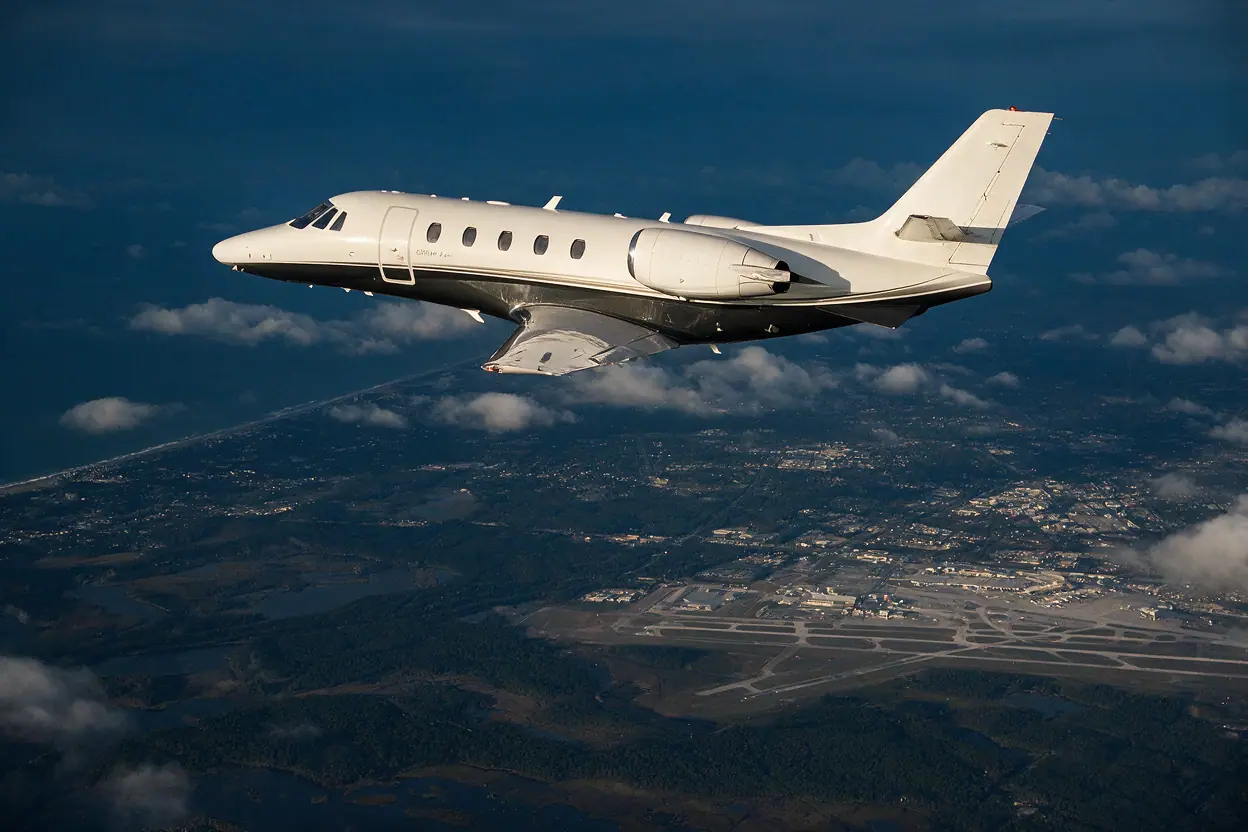
Midsize jet
Midsize jets run $5,200 to $7,800 per hour and add stand-up cabin height and more baggage capacity. Expect seven to nine passengers and about 2,100 nautical miles of range at 440 knots, which opens transcontinental routes with favorable winds. The cabin is quieter and better for working or sleeping. If you need to arrive ready for a meeting, then the extra headroom and space are usually worth the step up.
Cessna Citation XLS+
- 8 seats
- 441 kt cruise
- 2,100 nm range
The Citation XLS+ is a midsize jet for eight passengers, cruising at 441 knots with a range of 2,100 nautical miles. The cabin measures 5 ft 8 in tall by 18 ft 6 in long, and baggage capacity is 90 cu ft. That baggage bay is among the largest in the class. For ski trips or golf outings, the extra space is a real advantage.
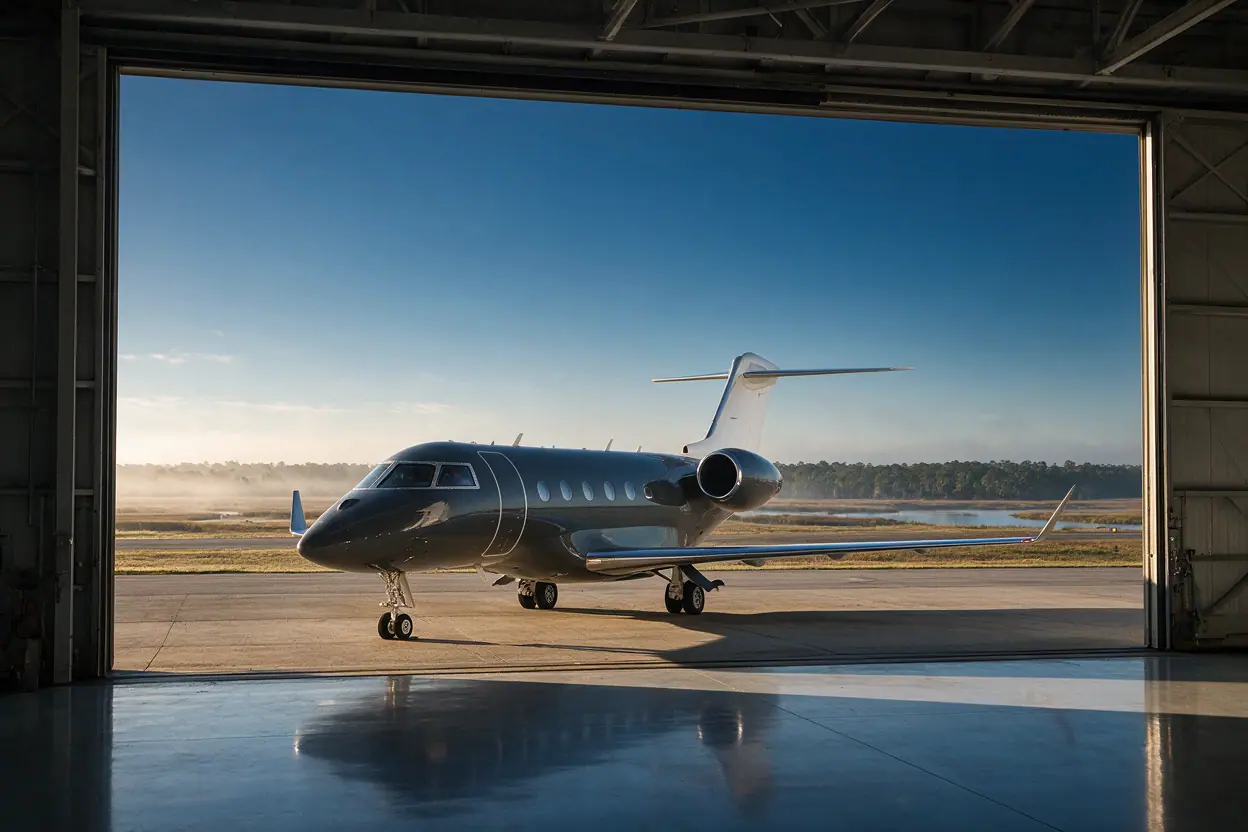
Cessna Citation Latitude
- 9 seats
- 446 kt cruise
- 2,700 nm range
Super-midsize jet
Super-midsize jets range from $7,200 to $10,000 per hour and are a favorite for long domestic legs. They fly eight to ten passengers up to 3,200 nautical miles at around 470 knots, with cabins tall enough to stand and baggage bays that swallow golf clubs and skis. The model line includes the Gulfstream G280 and Citation X+. For coast-to-coast missions with a full cabin, this class balances speed and comfort.
Cessna Citation X+
- 9 seats
- 527 kt cruise
- 3,460 nm range
The Citation X+ is a super-midsize jet for nine passengers, cruising at 527 knots with a range of 3,460 nautical miles. The cabin is 5 ft 8 in tall and 25 ft 2 in long, with 82 cu ft of baggage. It is one of the fastest civil jets in service. If time is the priority on a transcontinental leg, then the X+ shortens the flight.
Bombardier Challenger 350
- 10 seats
- 470 kt cruise
- 3,200 nm range
Heavy jet
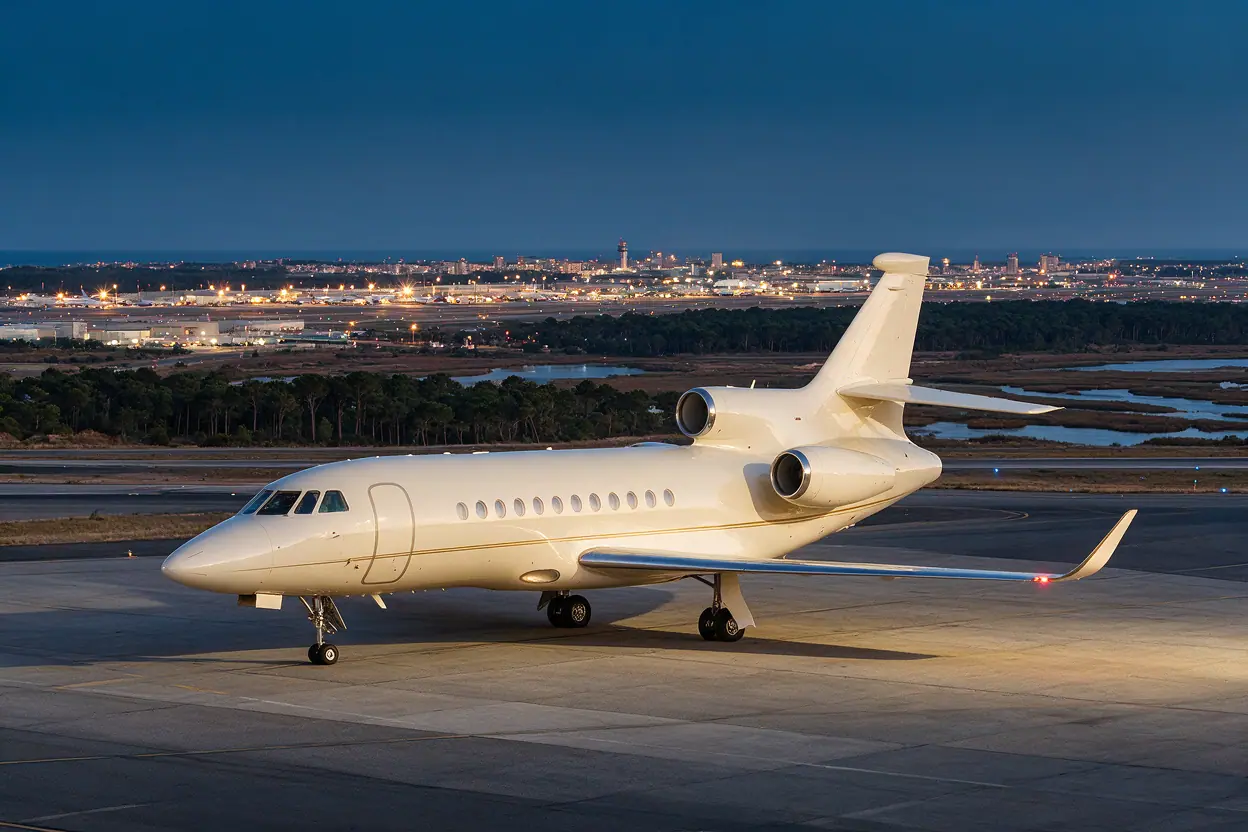
Heavy jets start at $9,500 and can reach $14,500 per hour, and they are built for transcontinental and international travel. A cabin for ten to fourteen passengers and 4,000 nautical miles of range means nonstop coast-to-coast even against winter headwinds. Types like the Challenger 650 and Falcon 900LX offer three-zone cabins and generous baggage. When your trip crosses an ocean or carries a large team, heavy jets provide the space and range.
Dassault Falcon 900LX
- 12 seats
- 459 kt cruise
- 4,750 nm range
The Falcon 900LX is a heavy jet for twelve passengers, cruising at 459 knots with a range of 4,750 nautical miles. Its cabin is 6 ft 2 in tall and 33 ft 2 in long, with 127 cu ft of baggage. Three engines provide additional safety margins over water. For international trips that require range and redundancy, it is a capable choice.
Gulfstream G450
- 14 seats
- 476 kt cruise
- 4,350 nm range
Choosing the right aircraft
The most useful first question is how many hours you will fly and how many people are coming, because the private jet cost aircraft equation is driven by both. A light jet at $3,800 to $5,800 per hour may be all you need for a two-hour hop, while a heavy jet at $9,500 to $14,500 per hour makes sense for a long leg with a large group. Match the cabin to the passenger count and the baggage to the trip length.
Then look at the airports. Runway length and density altitude can rule out certain types on hot days, especially at high-elevation fields like Centennial in Denver. If your destination has a short runway, then a turboprop or a light jet with good short-field performance may be the only option. We check these details before we send a quote so that the aircraft you see can actually make the trip.
Questions
What does private jet cost aircraft pricing look like by class?
Turboprops run $2,200 to $3,500 per hour, light jets $3,800 to $5,800, midsize jets $5,200 to $7,800, super-midsize jets $7,200 to $10,000, and heavy jets $9,500 to $14,500. These are hourly estimates before airport fees and taxes. The class you choose sets the base, and the route length multiplies it.
How much does a light jet cost for a typical route?
A light jet from New York to Miami, about 949 nautical miles, typically quotes $10,000 to $15,000. The flight takes about 2 hours 37 minutes. Shorter legs like Los Angeles to Las Vegas run $4,000 to $6,000. These are estimates that depend on the specific aircraft and airport fees, so ask for a firm quote.
What is the cost of a heavy jet for a transcontinental flight?
Heavy jets range from $9,500 to $14,500 per hour. A coast-to-coast mission like New York to Los Angeles, 2,129 nautical miles, would be priced at the upper end of that range depending on the aircraft and crew. For a large group or international leg, the heavy jet's cabin and range often justify the cost.
Are turboprops cheaper than jets for short trips?
Yes, turboprops at $2,200 to $3,500 per hour are the lowest-cost class. They cruise near 300 knots and carry six to eight passengers about 1,500 nautical miles. For a one-hour regional trip, a turboprop can be significantly less than a light jet. When runway length is short, a turboprop may also be the only option.
How do density altitude and runway length affect private jet cost aircraft choices?
Hot days and high elevations reduce aircraft performance. At Centennial Airport near Denver, elevation is 5,885 ft and the peak density altitude at 115F reaches 9,800 ft, which can limit heavy jets. If your departure or destination is hot and high, then a lighter aircraft or a turboprop may be required, and that can change the price.
Who operates the aircraft and who is responsible for the flight?
Flights are operated by FAA Part 135 operators who hold operational control and responsibility for the crew and aircraft. As a charter broker, we act as your agent under DOT Part 295 and arrange the flight on your behalf. For international legs, the operator coordinates with CBP, and TSA rules apply where relevant.