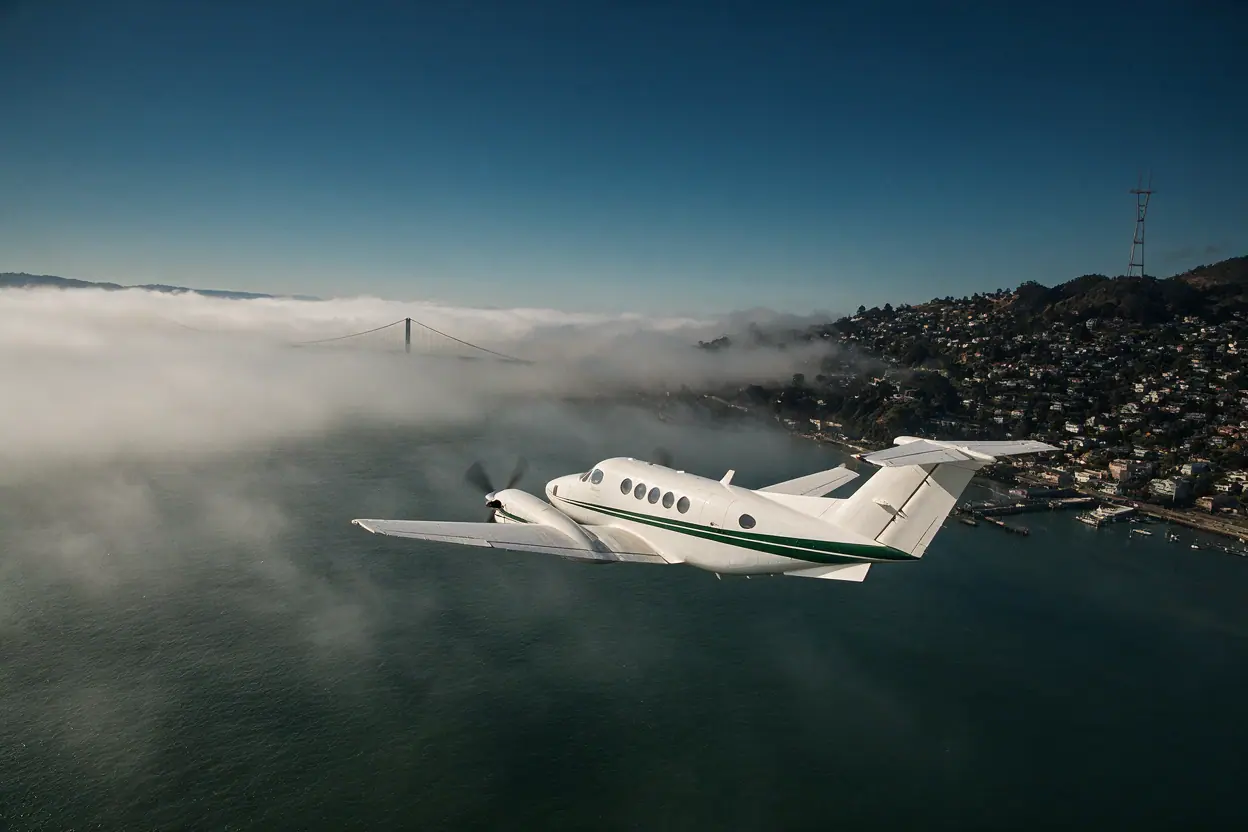
Private jet pricing Los Angeles to San Francisco
Private jet pricing Los Angeles to San Francisco depends on the class you book. A turboprop quotes roughly $3,000 to $4,500 for the 279 nautical miles. Jets climb from there, and the flight itself barely passes an hour.
- 279 nm321 statute miles
- 1h 17mturboprop time en route
- $3,000–$4,500estimate one way
Los Angeles to San Francisco private jet prices by aircraft
A private jet journey from Los Angeles to San Francisco spans 279 nautical miles, taking 1h 17m on a turboprop, with an estimated one-way price of $3,000–$4,500.The table below sets each class against the clock and the quote range for this route. Times are airborne, nonstop, in typical conditions; your operator confirms them with the tail number. The numbers are estimates from a broker's market view, not a live quote, so treat them as a starting point for the conversation.
| Type of aircraft | Flight time | One-way estimate | Notes |
|---|---|---|---|
| Turboprop | 1h 17m | $3,000–$4,500 | Best fit |
| Light jet | 0h 59m | $4,000–$6,000 | Nonstop |
| Midsize jet | 0h 58m | $5,000–$8,000 | Nonstop |
| Super-midsize jet | 0h 55m | $7,000–$10,000 | Nonstop |
| Heavy jet | 0h 55m | $9,500–$14,500 | Nonstop |
Prices are estimates per aircraft, not per seat, before federal excise tax and segment fees. Duration covers taxi, climb and descent.
Why a turboprop fits this trip
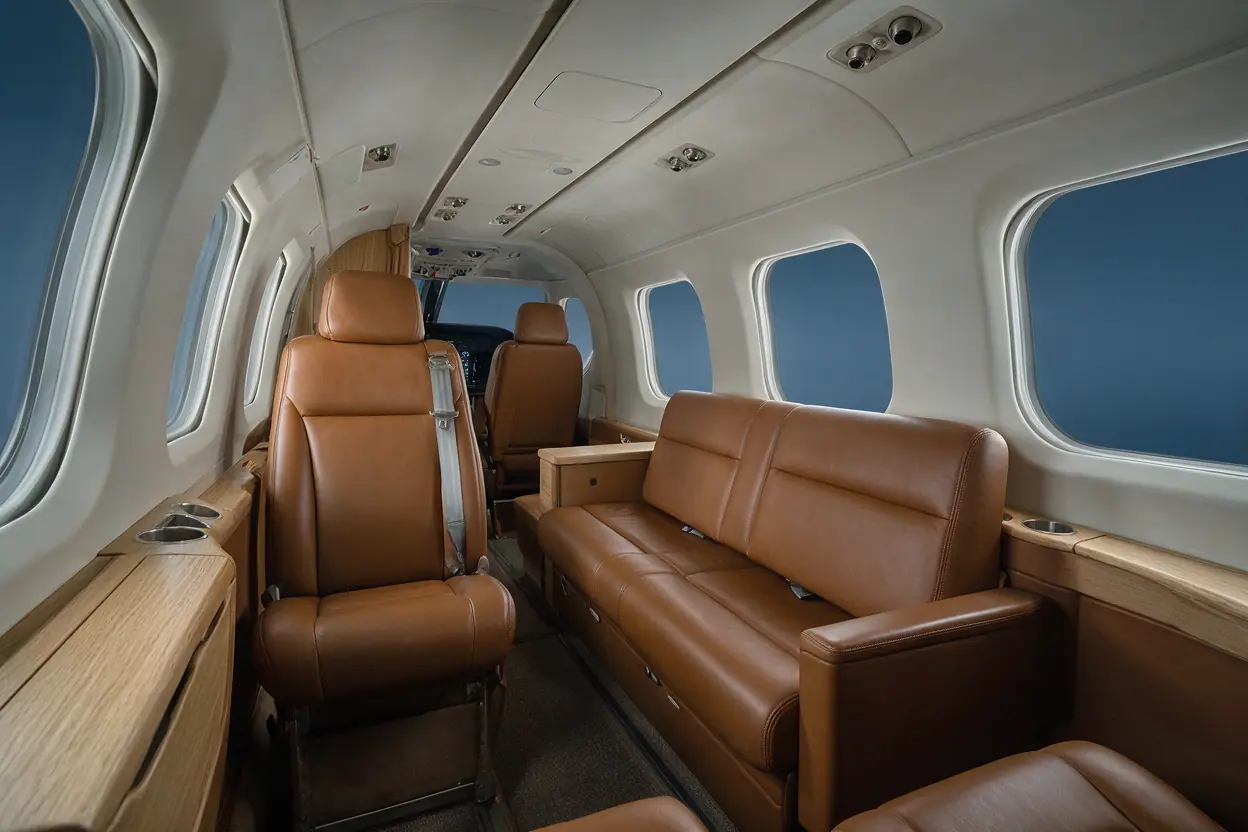
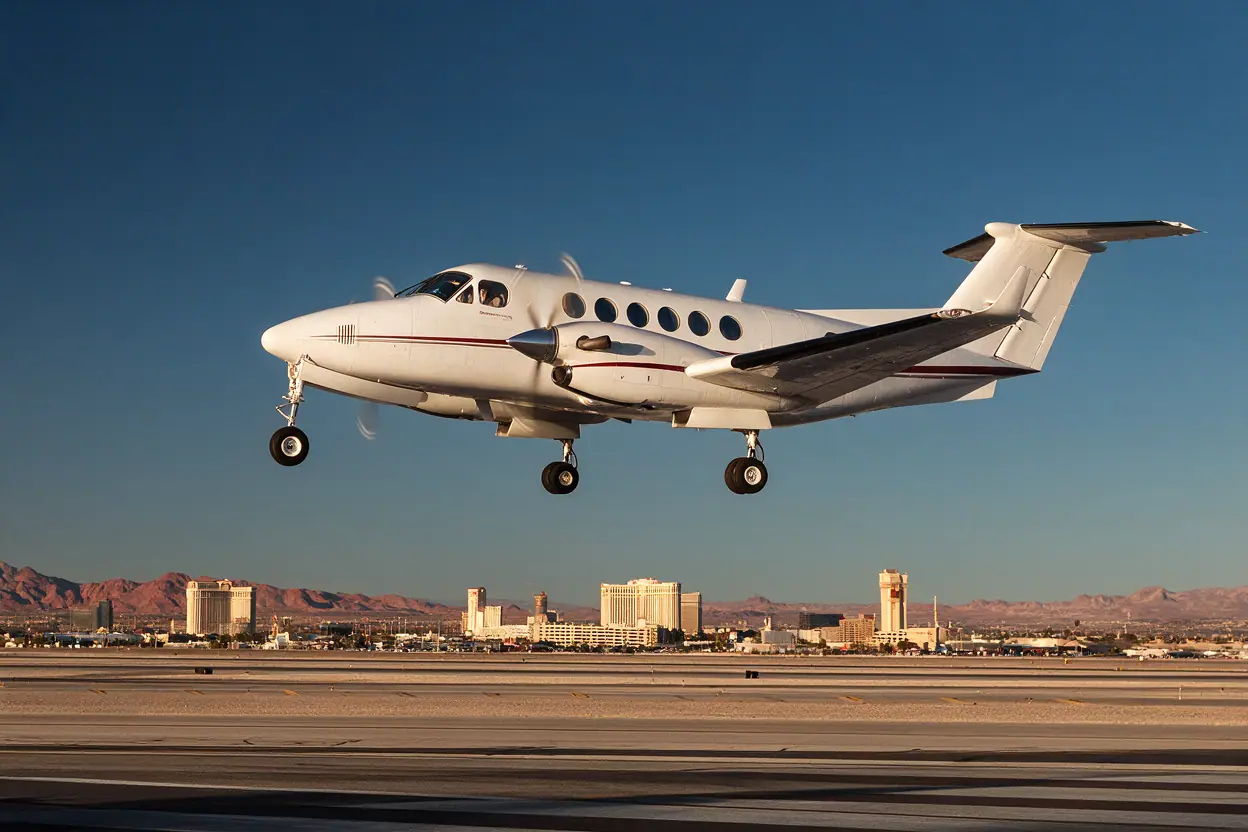
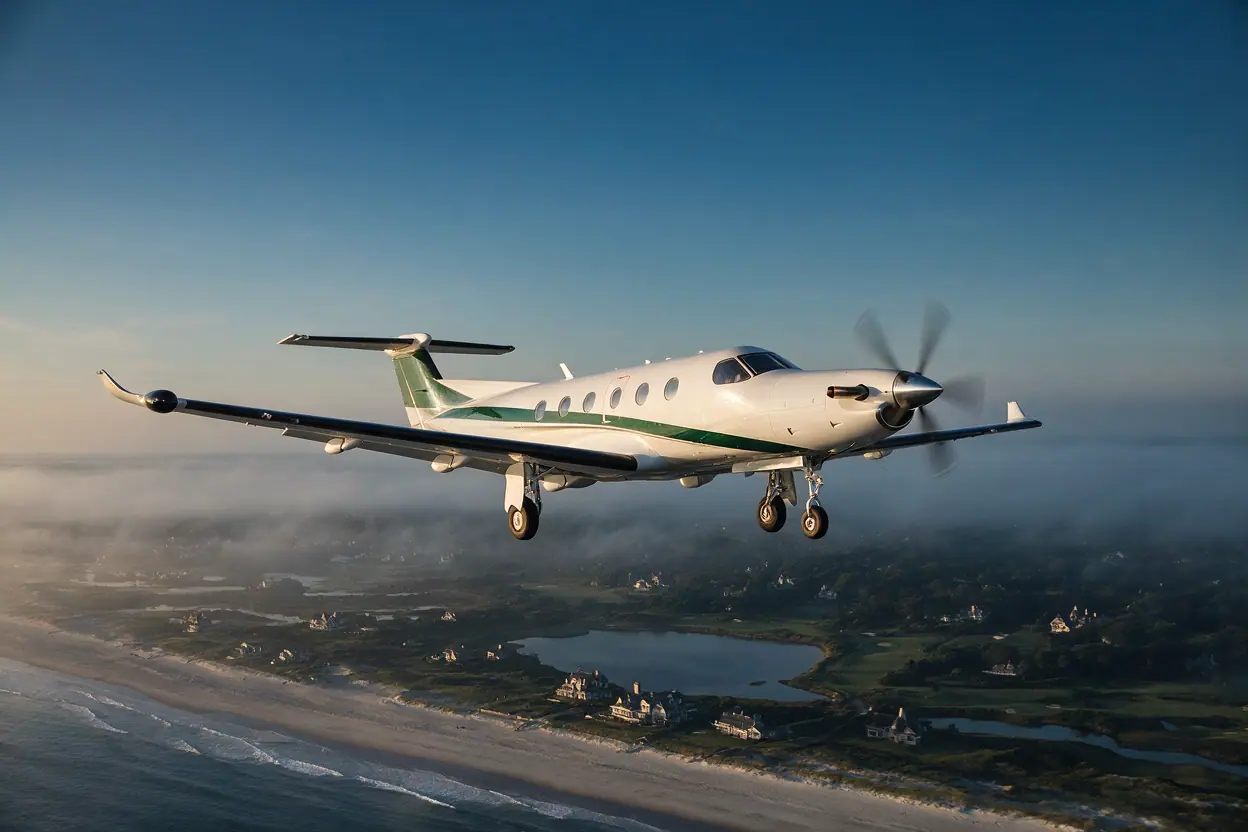
For a 279 nm hop, the turboprop is the practical choice: a Beechcraft King Air 350i or Pilatus PC-12 NGX lands in about 1h 17m and quotes roughly $3,000 to $4,500, less than the light jet range of $4,000 to $6,000. The saving is real and the time penalty is small on this short hop. A light or midsize jet saves perhaps twenty minutes in the air; a super-midsize or heavy jet trims that to about 22 minutes and adds a four-figure sum. When the schedule is tight, the light jet is the sensible middle: about 0h 59m at an estimate of $4,000 to $6,000, with cabin room for luggage that a smaller turboprop cabin compresses.
The turboprop also opens more of the Bay Area. Shorter runways and smaller fields that a heavy jet cannot use are within reach, and arriving closer to your meeting in the Financial District or SoMa can matter more than cruise speed on a sector this short. Groups of six to eight fit the King Air 350i comfortably; the PC-12 NGX suits six with lighter baggage. For a family or a four-person team with golf bags, the turboprop still pencils out ahead once you add the ground transfer at each end.
Pilatus PC-12 NGX
- 6 seats
- 290 kt cruise
- 1,800 nm range
Cabin 4 ft 10 in tall, 16 ft 11 in long. Baggage 40 cu ft.
Daher TBM 960
- 6 seats
- 330 kt cruise
- 1,730 nm range
Cabin 4 ft tall, 13 ft 3 in long. Baggage 32 cu ft.
Leaving Los Angeles
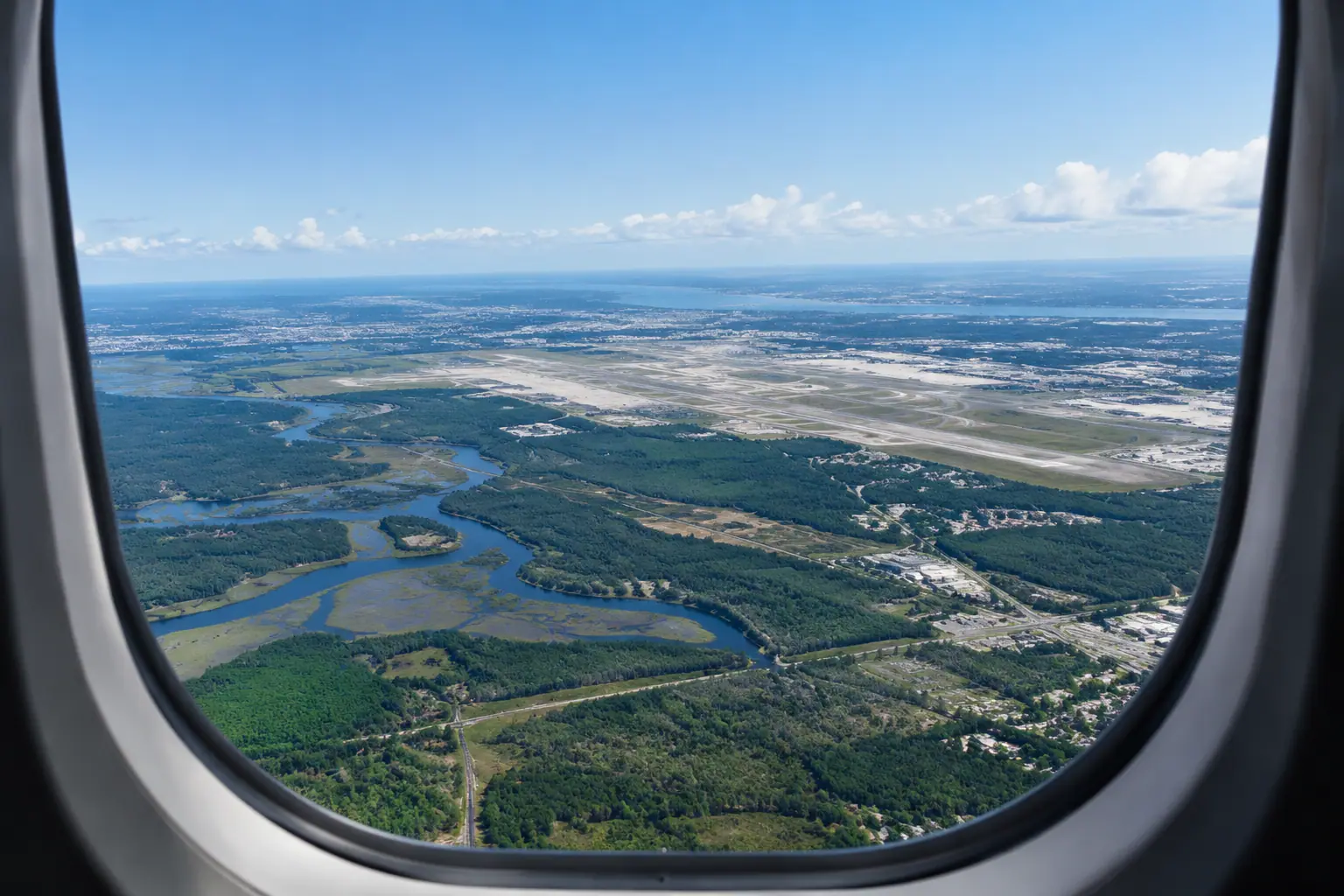
Most Los Angeles departures use Van Nuys or Burbank rather than LAX if the schedule allows. Van Nuys has an 8,001 ft runway and a short drive from the Westside and the Valley; Burbank sits closer to Hollywood and downtown. LAX comes into play when a passenger is already on a commercial connection or lives near the South Bay. Your broker will match the field to your morning, since the drive across the Sepulveda Pass can cost more time than the flight saves.
If your group carries ski bags or golf clubs, then Van Nuys gives the crew more room to load without repacking. The 8,001 ft runway also handles turboprops and light jets with margin on warm afternoons. Burbank's 6,886 ft strip is fine for a King Air or PC-12 but leaves less margin for a heavy jet at high temperatures.
Arriving in San Francisco
San Francisco International and Oakland both serve the Bay Area, and the choice shapes your last mile. SFO has an 11,870 ft runway and rail links into the city; Oakland's 10,520 ft runway often suits East Bay meetings. From either, the drive to Union Square, the Embarcadero or a Giants game at Oracle Park is short outside rush hour. If your day includes Napa or Silicon Valley, tell the broker before the quote is built.
When the marine layer sits low over SFO, then morning arrivals can slow and the crew may plan extra fuel. Oakland often escapes the worst of it, which is one reason East Bay-bound passengers sometimes prefer it. Neither airport requires CBP clearance on this domestic route, so you walk from the aircraft to the car without a customs stop.
| Airport | Code | Runway |
|---|---|---|
| San Francisco International Airport | KSFO / SFO | 11,870 ft |
| Oakland San Francisco Bay Airport | KOAK / OAK | 10,520 ft |
| Van Nuys Airport | KVNY / VNY | 8,001 ft |
| Hollywood Burbank/Bob Hope Airport | KBUR / BUR | 6,886 ft |
| Los Angeles International Airport | KLAX / LAX | 12,894 ft |
When Los Angeles to San Francisco
Demand peaks on weekday mornings and around major Bay Area events, so book early for those dates. Tech earnings weeks, Salesforce and Moscone conferences, and the fall football and baseball calendars all pull traffic north. Return legs on Thursday and Friday afternoons fill first. For the best estimate, request the quote seven to ten days out; same-week requests still work but narrow the aircraft pool, and if you wait until the day before, then the turboprop option may be gone and only larger jets remain.
Fog season and summer heat are the two weather notes that touch this hop. SFO arrivals can slow under low marine layer in the mornings, and Van Nuys can run hot in July and August, which nudges density altitude and payload planning on turboprops. Neither is a reason to avoid the route; both are reasons to let the operator plan fuel and baggage with the forecast in hand. If your trip is a same-day round trip, tell the broker, because crew duty time and waiting fees shape the return quote more than the distance does.
Private jet routes akin to Los Angeles to San Francisco
These 6 private jet routes span 82 to 208 nautical miles, with single-leg turboprop estimates from $2,000 to $3,500.
Questions about this route
What is private jet pricing Los Angeles to San Francisco for a light jet?
A light jet on this route quotes roughly $4,000 to $6,000 and flies nonstop in about 0h 59m over 279 nautical miles. That is an estimate across the market, not a firm charter price; the tail number, date and passenger count set the final figure. Ask for the operator's name and certificate before you book.
How long is the flight from Los Angeles to San Francisco by private jet?
About 0h 55m to 0h 59m airborne, depending on class. The turboprop takes roughly 1h 17m, the light jet 0h 59m, and the midsize, super-midsize and heavy jets about 0h 55m to 0h 58m. Door to door, the turboprop often beats commercial because you skip terminal time.
Can I do a same-day round trip?
Yes. At 321 miles each way, a same-day round trip is routine; the aircraft waits or returns on schedule. Expect the return leg to add a second quote range of the same order, and confirm crew duty limits with the operator when you book. If your meeting runs long, then the waiting fees change the return estimate.
Which airports serve each end of this route?
Departures use Van Nuys, Burbank or LAX; arrivals use San Francisco International or Oakland. Van Nuys has an 8,001 ft runway, SFO 11,870 ft and Oakland 10,520 ft. Your broker picks the pair that shortens your ground time, and the choice can shift the quote by a few hundred dollars.
Is a turboprop cheaper than a jet on this distance?
Yes. The turboprop quotes about $3,000 to $4,500 against $4,000 to $6,000 for a light jet and $5,000 to $8,000 for a midsize. Over 279 nm the turboprop's slower cruise costs little time, so the saving is usually worth taking unless your schedule demands the faster cabin.
Who is responsible for the flight and the booking?
The flight is flown by an operator holding FAA Part 135 authority and operational control; the broker arranges it as an agent under DOT Part 295 rules. Ask for the operator's name and certificate before you pay. International legs would also involve CBP, though this route stays within California.