Private jet pricing Harry Reid
Harry Reid International puts you two miles from the Strip. LAS sits at 2,181 feet, with a longest runway of 14,835 feet. This guide explains what shapes quotes.
- KLAS · LASairport codes
- 2,181 ftfield elevation
- 14,835 ftlongest runway
- 0 mito New York
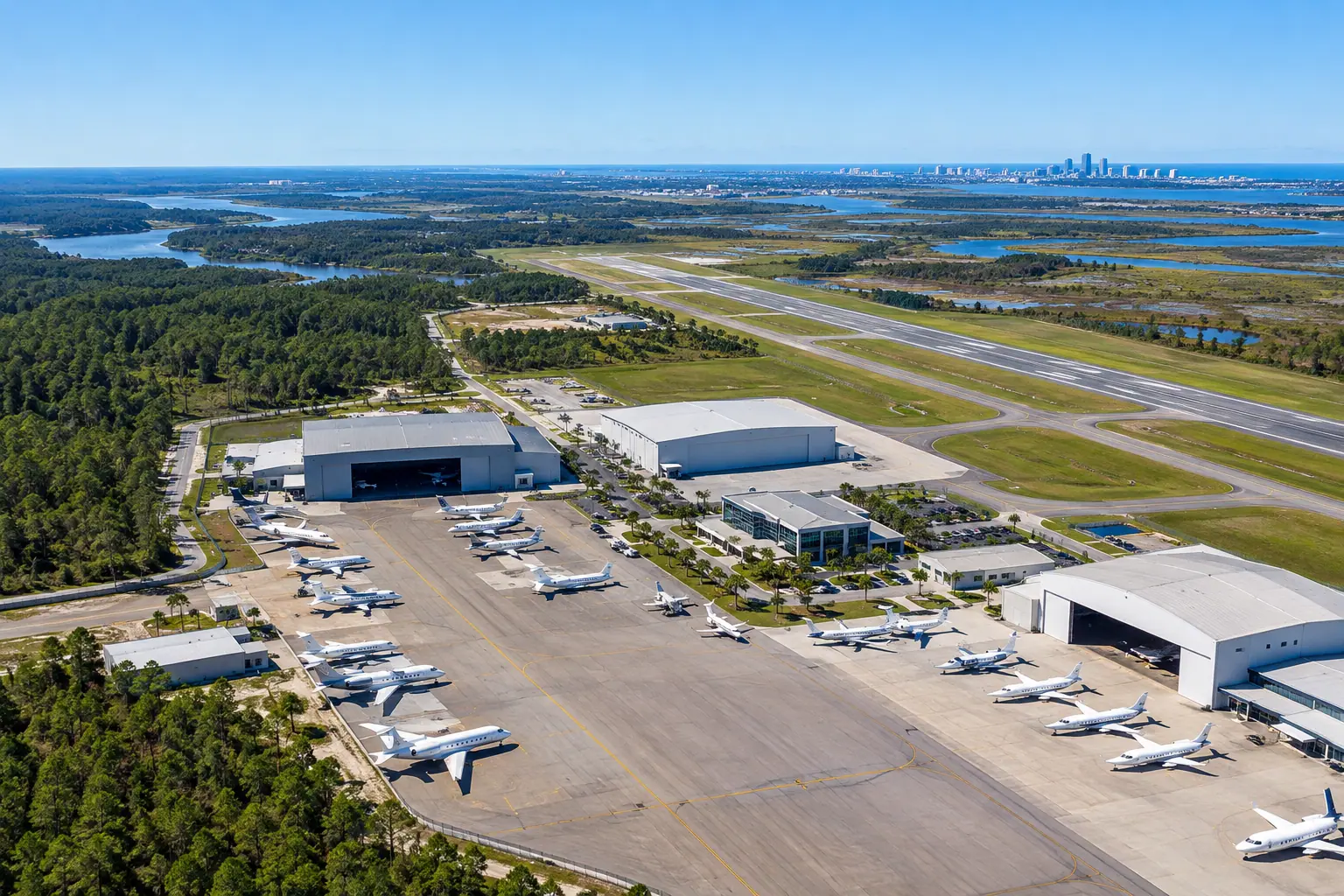
Harry Reid International Airport (LAS) sits 2 miles from the Las Vegas Strip, elevation 2,181 ft. That proximity is the reason so many groups fly private into LAS rather than drive in from a distant field. The airport handles heavy commercial traffic, but its general aviation side is separate enough that a charter arrival feels nothing like the terminal. Pilots and crews know the field, and local ground teams handle dozens of arrivals a week.
Private jet pricing Harry Reid depends on aircraft category, day of week, and how close you book. A light jet from the West Coast is a different budget than a midsize from the Midwest, and a Friday arrival during a convention week is a different budget again. Quotes are estimates until an operator confirms aircraft and crew. We arrange the flight as your agent; the flying is done by FAA Part 135 operators who hold operational control.
Harry Reid is a port of entry, so international legs clear CBP on arrival. That matters for charter flights from Mexico and Canada. Most domestic travelers never touch customs, but the airport's status keeps cross-border itineraries simple. For everyone else, the work is in the details: which FBO, what time the ramp opens, and how the ground transfer lines up with your reservation.
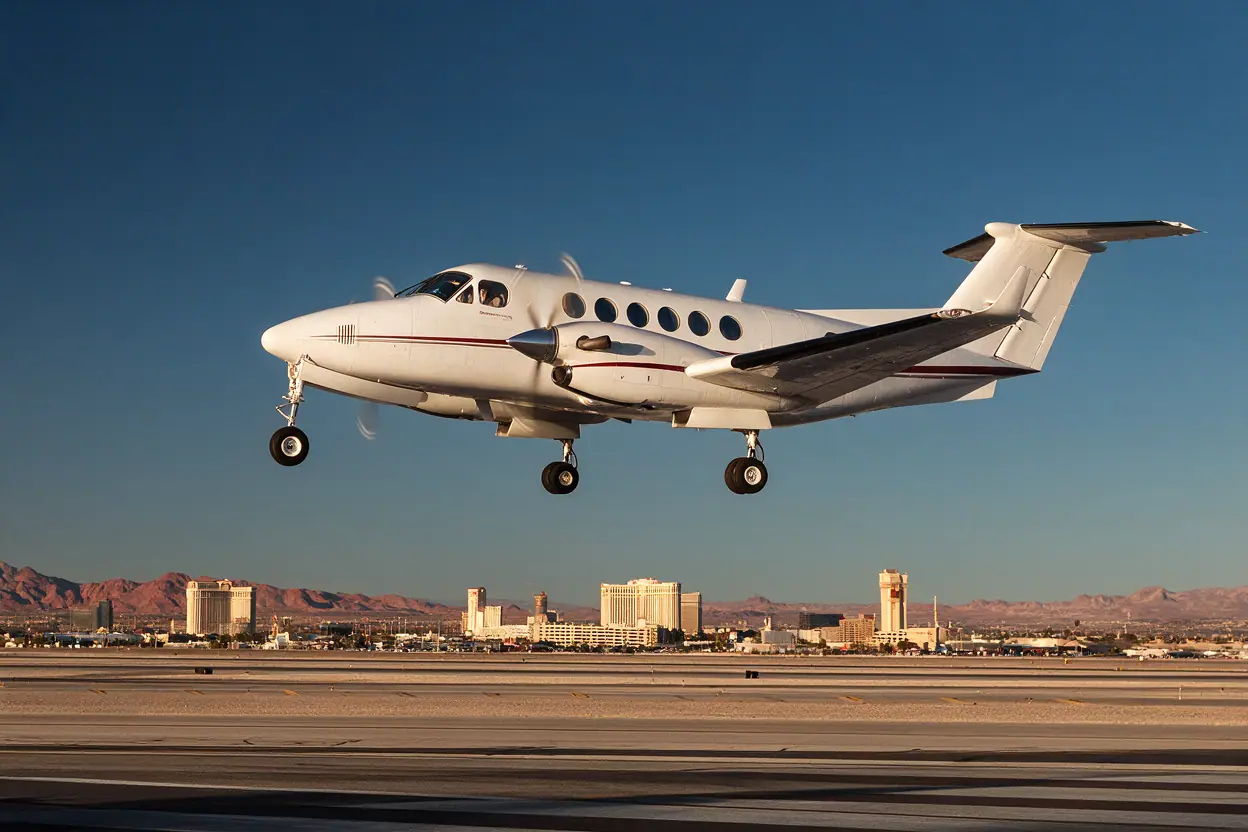
The field's 14,835 ft runway handles every category of business jet in service. If your group is large or your route is long, LAS is not the constraint — the aircraft you choose is. A turboprop on a short regional hop and a heavy jet on a transcon are both routine here, and pricing reflects the difference in operating cost, not the airport.
Runways and field notes at Harry Reid
Harry Reid's longest runway measures 14,835 ft at 2,181 ft elevation, so field length is never the limit. What does limit performance is summer heat. Density altitude climbs to about 5,800 ft in July and reaches roughly 6,300 ft at 115F, which affects takeoff distance and climb performance on smaller jets. Operators plan for it, but it can change which aircraft they assign to a summer departure. If you are flying out on a hot afternoon, then expect the quote to reflect the aircraft that can actually perform.
June through September brings highs of 101 to 105F, and wet days are rare. Runway conditions are usually dry and predictable. Winter highs fall to 57F with a few wet days a month, which is close to ideal for departure performance. Pilots brief the heat the same way they brief winds — as a planning number, not a surprise.
| Runway | Ft | Ft | Surface |
|---|---|---|---|
| 08L/26R | 14,835 ft | 150 ft | Asphalt |
| 08R/26L | 10,526 ft | 150 ft | Asphalt |
| 01L/19R | 9,770 ft | 150 ft | Concrete |
| 01R/19L | 9,769 ft | 150 ft | Asphalt |
FBOs and where your flight will park
Two FBOs serve general aviation at LAS: Atlantic Aviation and Signature Aviation. Your operator chooses based on hangar space, fuel contracts and ramp availability, not on your preference. Both are used to charter arrivals and can coordinate ground transportation. If you have a tight schedule, then ask which FBO your flight is assigned to before you book the car.
The two-mile distance to the Strip is short enough that the FBO choice rarely changes your drive. A car from either location reaches the resort corridor quickly. What varies is the ramp and lobby experience on a busy weekend, and that is worth asking about when you confirm.
Best for
- Groups flying in for conventions and trade shows at the Las Vegas Convention Center
- Bachelor and bachelorette parties where the flight is part of the weekend
- West Coast weekend trips from Van Nuys, Los Angeles and the Bay Area
- International arrivals from Mexico and Canada that clear CBP at LAS
| Class | Typical runway need | Here |
|---|---|---|
| Turboprop | 3,300 ft+ | Fits |
| Light jet | 4,000 ft+ | Fits |
| Midsize jet | 5,000 ft+ | Fits |
| Super-midsize jet | 5,200 ft+ | Fits |
| Heavy jet | 5,600 ft+ | Fits |
Weather and density altitude by season
July density altitude reaches about 5,800 ft, and August is close behind at 5,600 ft. Those are the numbers that shape summer departures. A jet that performs comfortably in January at 2,600 ft density altitude may need a longer takeoff roll or a weight restriction on a July afternoon. Light jets feel this most; larger aircraft have more margin.
Winter and spring are the easy months, with density altitude at 2,600 to 4,100 ft from January through April. If your trip is flexible and your aircraft is small, then a morning departure in summer is often the cheapest way to get the performance you need without changing aircraft. Operators will tell you when heat is the reason a quote changed.
| Month | Avg high | Wet days | Density altitude |
|---|---|---|---|
| Jan | 57°F | 4 | 2,600 ft |
| Feb | 63°F | 3 | 3,000 ft |
| Mar | 70°F | 4 | 3,400 ft |
| Apr | 80°F | 2 | 4,100 ft |
| May | 87°F | 1 | 4,600 ft |
| Jun | 101°F | 0 | 5,500 ft |
| Jul | 105°F | 2 | 5,800 ft |
| Aug | 103°F | 2 | 5,600 ft |
| Sep | 95°F | 1 | 5,100 ft |
| Oct | 81°F | 2 | 4,200 ft |
| Nov | 66°F | 1 | 3,200 ft |
| Dec | 57°F | 2 | 2,600 ft |
Getting from the airport to the Strip
The Strip is 2 miles from Harry Reid, which makes LAS one of the closest major airports to its city center. Your FBO can arrange a car, and ride-share pickup is straightforward. If you are heading to a resort on Las Vegas Boulevard, then the transfer is short enough that timing it against your arrival is easy. Allow a little room on Friday afternoons when the corridor is busy.
Private jet routes via Harry Reid
These 6 private jet routes span 199 to 2,129 nautical miles, with single-leg light jet estimates from $4,000 to $36,000.
Questions about this airport
What drives private jet pricing Harry Reid travelers see most often?
Aircraft category is the biggest factor, followed by day of week and how far ahead you book. A light jet from the West Coast costs less than a midsize from the Midwest, and holiday or convention weekends push quotes higher. LAS itself is not an expensive airport to operate into; the 14,835 ft runway and 2,181 ft elevation suit every business jet. Quotes are estimates until an operator confirms aircraft and crew.
How far is Harry Reid International from the Las Vegas Strip?
It is 2 miles from the Strip, which is why so many groups choose LAS over outlying fields. The drive to the resort corridor is short from either FBO, Atlantic Aviation or Signature Aviation. If your schedule is tight, then confirm which FBO your operator uses before you book ground transportation, since the two are on different sides of the field.
Does summer heat affect flights out of Las Vegas?
Yes. July density altitude is about 5,800 ft and can reach roughly 6,300 ft at 115F, which reduces performance on smaller jets. Operators may adjust weight or aircraft assignment on hot afternoons. If you are flying a light jet in July, then a morning departure usually performs better. Winter density altitude drops to about 2,600 ft, so cold-weather departures are rarely a concern.
Which airports do charter flights use for Las Vegas?
Most private flights use Harry Reid International, with Atlantic Aviation and Signature Aviation handling general aviation. LAS has a 14,835 ft runway and sits at 2,181 ft elevation, so it accepts every category of business jet. Some travelers compare Van Nuys and other West Coast fields for departure, but on the Las Vegas end, LAS is the standard choice for charters and turboprops alike.
Can international charter flights clear customs at LAS?
Yes. Harry Reid is a port of entry, so flights from Mexico and Canada can clear CBP on arrival. That keeps cross-border itineraries on one ticket rather than a repositioning stop. If you are arriving internationally, then confirm the customs window with your operator before booking, since clearance hours can shape your arrival time.
Who operates the aircraft on a charter arranged through a broker?
Flights are operated by FAA Part 135 operators who hold operational control; the broker arranges the trip as your agent under DOT Part 295. That means the operator's certificate, crew and maintenance program govern the flight, and the quote reflects their pricing. If you want to know the operator before you book, then ask, and we will name the certificate holder on the quote.