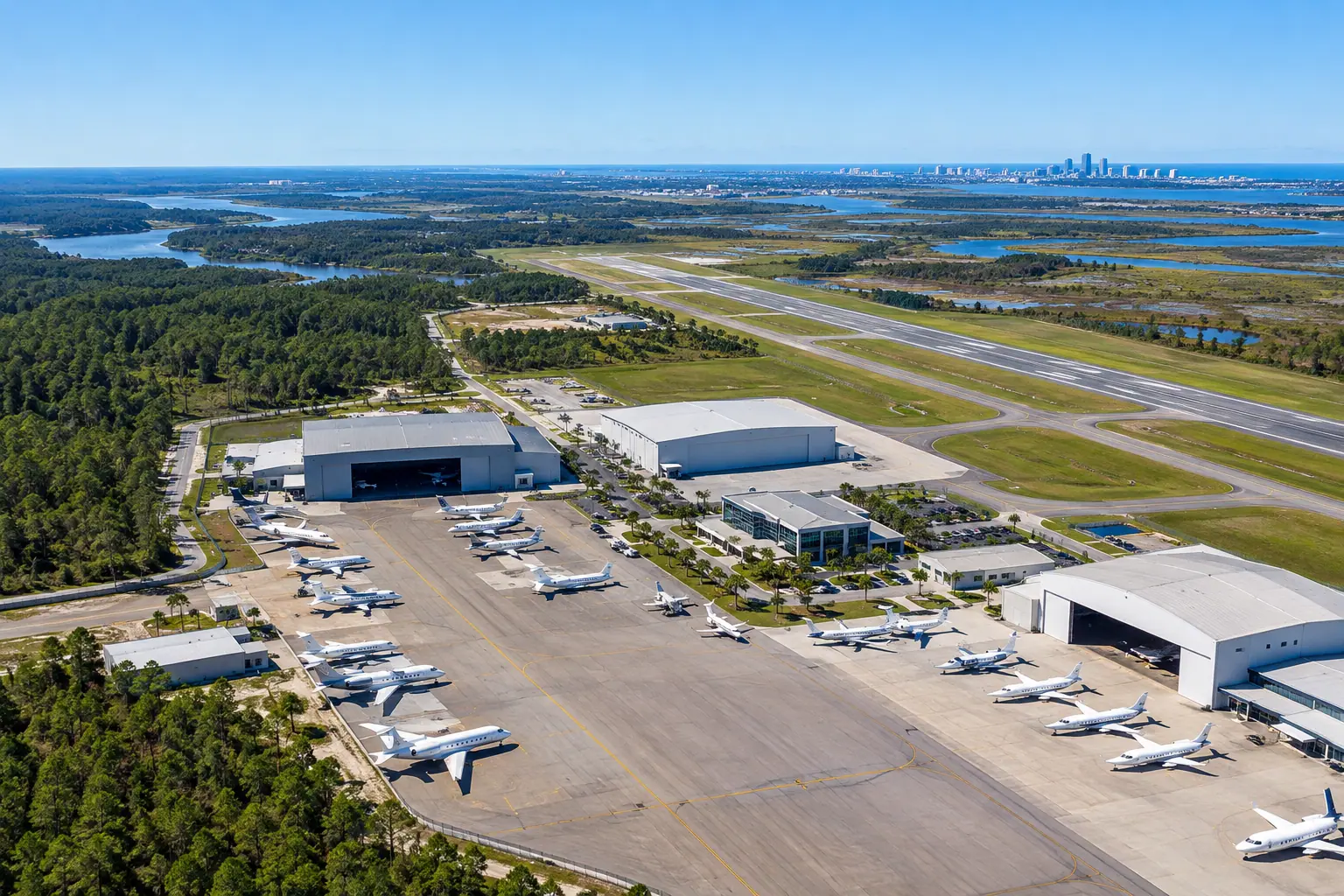
Private jet pricing Washington Dulles
Private jet pricing Washington Dulles depends on aircraft category, runway performance and the day you fly. The field sits at 312 ft elevation with an 11,500 ft longest runway, so most types clear it easily. Quotes are estimates until an operator confirms your tail and crew.
- KIAD · IADairport codes
- 312 ftfield elevation
- 11,500 ftlongest runway
- 0 mito New York
Private jet pricing Washington Dulles starts with the field itself, because Washington Dulles International Airport sits at 312 ft elevation with a longest runway of 11,500 ft. That runway is long enough that midsize and heavy jets rarely need a performance penalty on a normal day. When you request a quote, the operator pairs your passenger count and baggage with a specific aircraft, then confirms the crew and the day rate before anything is final.
Dulles gives heavy and midsize jets room to work at 312 ft field elevation on most departures, which keeps the price closer to the aircraft's baseline hourly rate. Light jets are often the cheaper option for shorter hops, while turboprops can make sense on regional legs where block time matters less than fuel burn. Costs shift with aircraft category, the number of flight hours, crew duty time and how long the aircraft waits on the ground for you.
It helps to think of a quote as three pieces rather than one number. There is the charter rate for the flight, the positioning of the aircraft if it is not based locally, and the fees at the airport where you board. Operators who hold operational control set those figures and fly the trip; we arrange the charter as your agent under DOT Part 295 authority. That distinction matters when something changes on the day, because the operator makes the operational call.
Runways and field elevation at Dulles
Washington Dulles International Airport has a longest runway of 11,500 ft at 312 ft field elevation, which is generous for a charter departure. The 11,500 ft runway at Dulles supports heavy jets on long transcontinental legs without the payload limits you see at shorter fields. Pilots still run takeoff and landing distance calculations against temperature, wind and aircraft weight, and they file the plan the FAA requires for the route.
| Runway | Ft | Ft | Surface |
|---|---|---|---|
| 01C/19C | 11,500 ft | 150 ft | CONC-G |
| 01R/19L | 11,500 ft | 150 ft | Concrete |
| 12/30 | 10,501 ft | 150 ft | Concrete |
| 01L/19R | 9,400 ft | 150 ft | Concrete |
FBOs and ground handling at IAD
FBO options at Dulles include Atlantic Aviation and Signature Aviation, with APP Jet Center - Manassas as a nearby alternative for some itineraries. Atlantic Aviation and Signature Aviation both handle private flights at Dulles and coordinate ramp access with the airport. Ground handling, parking and after-hours fees vary by provider and by how long your aircraft sits, so ask for those line items in writing before you approve a trip.
For international arrivals, the operator works with U.S. Customs and Border Protection to clear passengers and crew, and the FBO schedules the arrival around that process. TSA screening is not part of a typical private departure, but your operator will confirm identification requirements for each passenger. If your schedule is tight, ask which provider has the shorter ramp distance to the gate you actually use.
What Dulles is best for
- Long transcontinental charters where the 11,500 ft runway allows full payload on heavy and midsize jets
- Washington-area business travel to the West Coast, with roughly 2,061 miles to the Los Angeles basin
- International departures that need CBP clearance and a scheduled FBO arrival
- Groups that want a single ramp stop for both passengers and luggage on a tight schedule
| Class | Typical runway need | Here |
|---|---|---|
| Turboprop | 3,300 ft+ | Fits |
| Light jet | 4,000 ft+ | Fits |
| Midsize jet | 5,000 ft+ | Fits |
| Super-midsize jet | 5,200 ft+ | Fits |
| Heavy jet | 5,600 ft+ | Fits |
Weather and density altitude by season
Density altitude at Dulles climbs from roughly -700 ft in January to about 2,400 ft in July, and a hot day can push the peak toward 2,900 ft. July density altitude near 2,400 ft is modest for Dulles but still affects light jets on a full-fuel, full-seat departure. Spring and fall bring wet days in the range of 8 to 13 per month, so build a little slack into a tight connection.
Winter flying at Dulles means deicing and the delay that comes with it, and a January high near 43 F can still produce icy mornings on the ramp. If you are flying a light jet with four passengers and full bags on a hot July afternoon, then the operator may reduce fuel or stop for fuel to stay within performance limits. Heavy jets based at Dulles feel the heat far less, which is one reason their quotes stay steadier across the year.
| Month | Avg high | Wet days | Density altitude |
|---|---|---|---|
| Jan | 43°F | 9 | -700 ft |
| Feb | 48°F | 11 | -300 ft |
| Mar | 56°F | 10 | 200 ft |
| Apr | 66°F | 12 | 900 ft |
| May | 75°F | 13 | 1,500 ft |
| Jun | 84°F | 12 | 2,100 ft |
| Jul | 89°F | 13 | 2,400 ft |
| Aug | 86°F | 13 | 2,200 ft |
| Sep | 80°F | 11 | 1,800 ft |
| Oct | 69°F | 8 | 1,100 ft |
| Nov | 56°F | 8 | 200 ft |
| Dec | 48°F | 9 | -300 ft |
Getting to and from the airport
Dulles sits west of Washington and is reached by the Dulles Toll Road and the Dulles Greenway, with the Silver Line Metro connecting the airport to the city. Plan for the drive from downtown Washington to take longer in weekday traffic than the mileage suggests, and leave room for the FBO's own access road. Your provider can tell you which ramp entrance to use and where the crew will meet you.
Private jet routes via Washington Dulles
These 6 private jet routes span 199 to 2,129 nautical miles, with single-leg light jet estimates from $4,000 to $36,000.
Questions about this airport
What drives private jet pricing Washington Dulles on a typical trip?
Private jet pricing Washington Dulles is driven mainly by aircraft category, flight hours and crew duty time, with the 312 ft field elevation and 11,500 ft runway rarely limiting performance. A light jet on a short regional leg costs far less per hour than a heavy jet on a transcontinental run. Positioning, ground handling and any wait time are quoted separately, so ask for each line.
How much does the Dulles runway help with hot-weather departures?
The 11,500 ft longest runway gives most jets margin even when July density altitude reaches about 2,400 ft. Light jets carrying full fuel and full seats are the types most likely to see a payload or fuel adjustment on a hot afternoon. Heavy and midsize aircraft based at Dulles are affected far less. The operator confirms performance before the trip is approved.
Which FBOs handle charter flights at IAD?
Atlantic Aviation and Signature Aviation both handle private flights at Dulles, and APP Jet Center - Manassas serves some itineraries as a nearby alternative. Ground handling, parking and after-hours charges differ by provider, so request an itemized estimate. For international legs, the FBO coordinates the arrival with U.S. Customs and Border Protection so passengers clear without a terminal walk.
When should I book a Dulles charter for a busy travel week?
Book as early as you can when your dates fall on a holiday week or a major Washington event, because based aircraft get committed first. A quote confirmed a few weeks out usually leaves more aircraft types to choose from and steadier pricing. Shorter notice is workable, but the operator may need to position an aircraft, which adds cost to the estimate.
Does a charter broker own the aircraft flying from Dulles?
No. Operators holding FAA Part 135 authority own or manage the aircraft and keep operational control of every flight. We act as your agent under DOT Part 295, matching your itinerary to a vetted operator and comparing quotes on your behalf. The operator's crew makes the go or no-go decision, and the operator's certificate covers the flight.
How do international departures from Dulles affect the estimate?
International legs add customs coordination with U.S. Customs and Border Protection and often a longer ramp sequence at the FBO. Those items appear in the estimate alongside flight hours and crew time. If your trip crosses a border, then the operator builds the schedule around the clearance window, so share passport details early and confirm the arrival plan before you approve the trip.